01
Fungus Rock
The distinctive offshore rock was closely connected with the history of Dwejra Tower and was once guarded because of its famous medicinal plant.
Explore Fungus Rock →A 17th-century watchtower standing above Gozo’s dramatic western coastline, built to watch the sea, protect Dwejra and guard access to nearby Fungus Rock.
Dwejra Tower stands on the high ground between Dwejra Bay and the Inland Sea on Gozo’s western coast. Completed in 1652 during the reign of Grand Master Giovanni Paolo Lascaris, it formed part of the coastal watchtower system established by the Order of St John.
Its position gave the guards a wide view of the surrounding sea. The tower was intended to keep the exposed coastline under surveillance, warn of approaching vessels and help prevent unauthorised landings, including access to the nearby Fungus Rock.
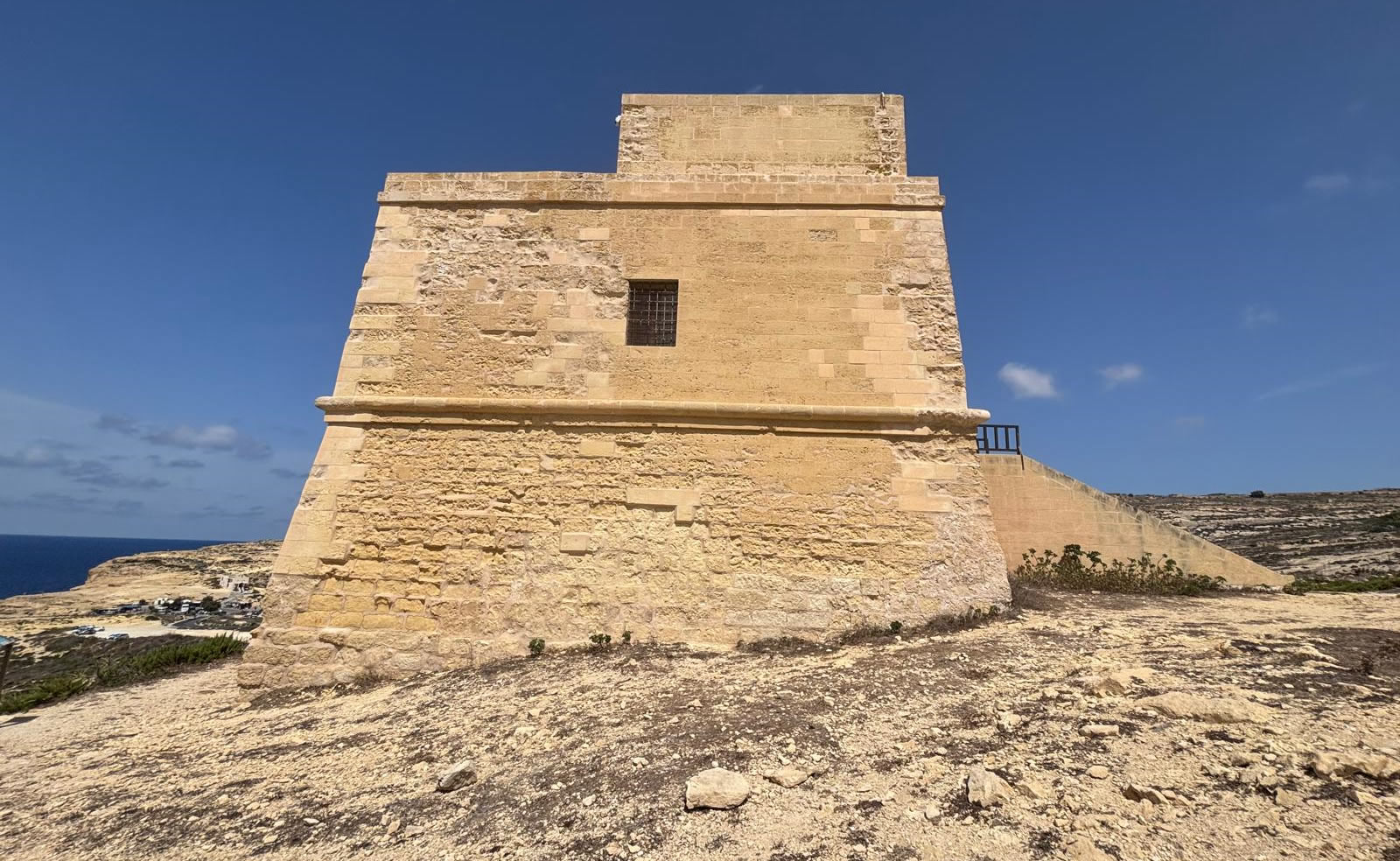
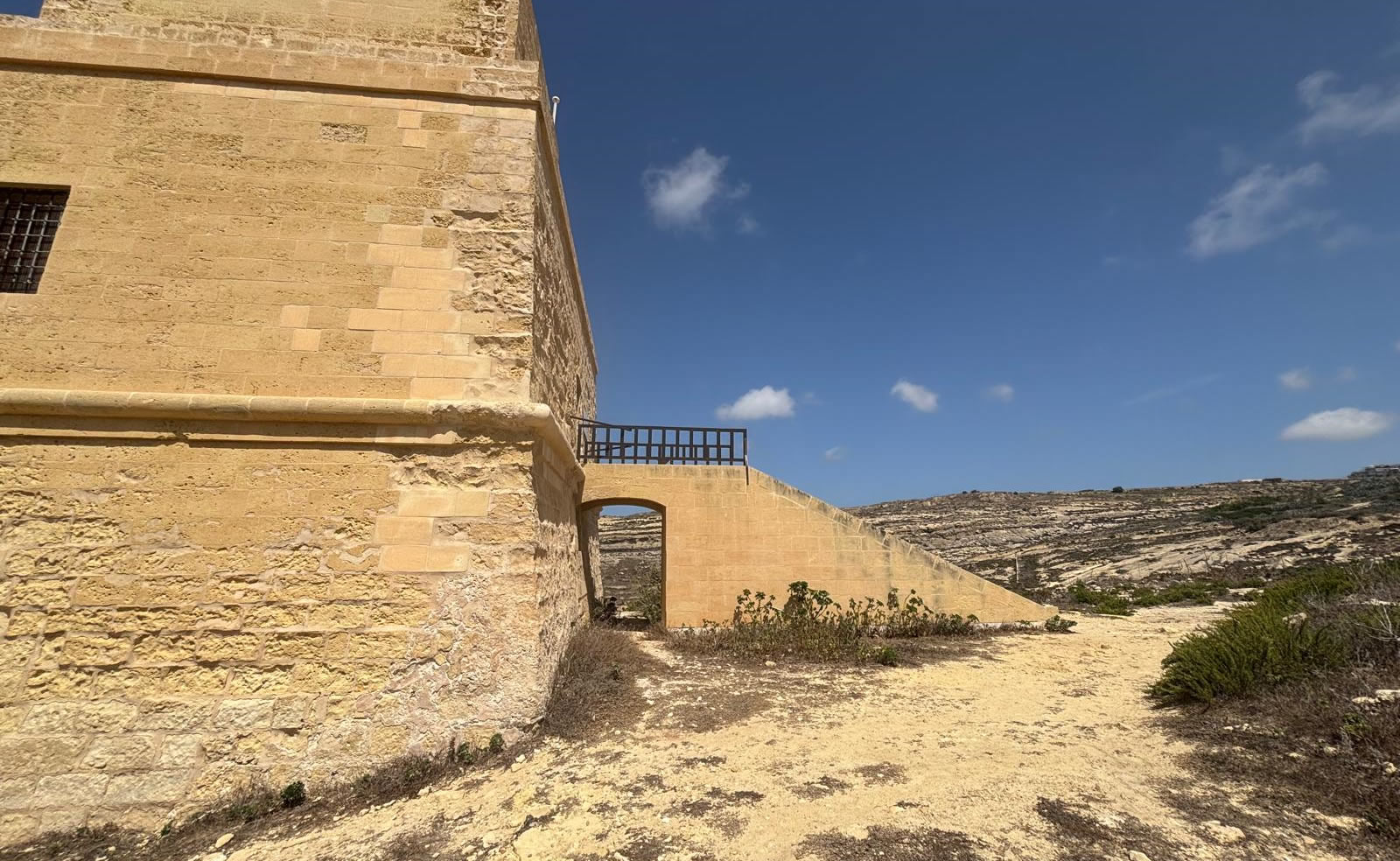
Dwejra was a vulnerable and isolated part of Gozo in the seventeenth century. The tower was financed by the Università of Gozo and equipped by the Order after its completion.
The tower was one of the Lascaris coastal towers, a group of defensive structures built to provide surveillance around the Maltese islands. Dwejra and Xlendi were among the final towers commissioned during the period of Grand Master Lascaris.
Dwejra Tower also had a particular role in protecting nearby Fungus Rock. The rock was associated with the highly prized medicinal plant known as fungus melitensis, and access to it was closely controlled.
In the eighteenth century the tower continued to watch over this part of the coast. Under Grand Master Manuel Pinto da Fonseca, measures were taken to make access to Fungus Rock more difficult.
Dwejra Tower was equipped with artillery after its construction. Historical records describe three six-pounder guns during the eighteenth century, together with powder, ammunition and other equipment required for the tower’s defence.
The tower was not simply a lookout. Its artillery gave the small garrison the ability to challenge vessels or landing parties and made it part of Gozo’s wider coastal defence network.
The tower continued to have military and surveillance uses after the end of the Knights’ rule. Between 1839 and 1873 it was manned by the Royal Malta Fencible Artillery.
It was later abandoned for a period, but the strategic position remained useful. During the First World War the coastline was again watched, and Dwejra Tower was subsequently used as an observation post during the Second World War.
During the Second World War Dwejra Tower served as an observation post, continuing the role for which the site had first been selected almost three centuries earlier.
The tower therefore forms an unusual link between two very different periods of Malta’s military history: the coastal defence system of the Knights of St John and the twentieth-century wartime observation network.
After years of exposure to weather and neglect, Dwejra Tower deteriorated considerably. Restoration work was undertaken by Din l-Art Ħelwa, helping to preserve the structure as an important part of Gozo’s architectural and military heritage.
The restored tower allows visitors to appreciate both its simple defensive architecture and its exceptional position overlooking the Dwejra landscape.
The distinctive offshore rock was closely connected with the history of Dwejra Tower and was once guarded because of its famous medicinal plant.
Explore Fungus Rock →A sheltered coastal lagoon connected with the open Mediterranean by a dramatic natural tunnel.
Explore the Inland Sea →One of Gozo’s most distinctive coastal landscapes, with cliffs, rock formations, paths and viewpoints surrounding the tower.
Explore Dwejra →Dwejra Tower is located within the Dwejra Heritage Park, close to the road leading down towards the Inland Sea and Dwejra Bay. The surrounding area is one of Gozo’s most visited coastal landscapes.
Access arrangements can change, so check current opening information before making a special journey. When the tower is open, visitors can explore the historic structure and appreciate the elevated views over the coast.
The surrounding terrain is exposed and rocky in places. Wear suitable footwear and take care near cliff edges and uneven ground.
Dwejra Tower was completed in 1652 during the reign of Grand Master Giovanni Paolo Lascaris.
It was built as a coastal watchtower to monitor Gozo’s exposed western coastline, warn of approaching vessels and help protect the area around Dwejra and Fungus Rock.
The tower is also known as Qawra Tower or Torri tal-Qawra.
Yes. The tower was used for coastal observation during the twentieth century, including during the Second World War.
The tower is managed by Din l-Art Ħelwa and has been opened to the public following restoration. Opening arrangements can vary, so check current information before visiting.
Continue exploring Dwejra, Gozo’s coastal heritage and historic sites.