01
Mġarr ix-Xini Bay
A sheltered, narrow inlet surrounded by steep limestone sides and a dramatic coastal landscape.
Explore Mġarr ix-Xini →A substantial 17th-century watchtower guarding the entrance to the secluded Mġarr ix-Xini inlet, built by the Knights of St John and completed in 1661.
Mġarr ix-Xini Tower stands at the mouth of the narrow, fjord-like inlet of Mġarr ix-Xini on Gozo’s southern coast. The tower was built during the rule of the Knights of St John and was functioning by June 1661.
Its position was carefully chosen to watch the entrance to the inlet and the sea approaches between Gozo and Comino. It formed part of the wider network of coastal watchtowers used to give early warning of enemy or corsair activity and to protect vulnerable landing places.
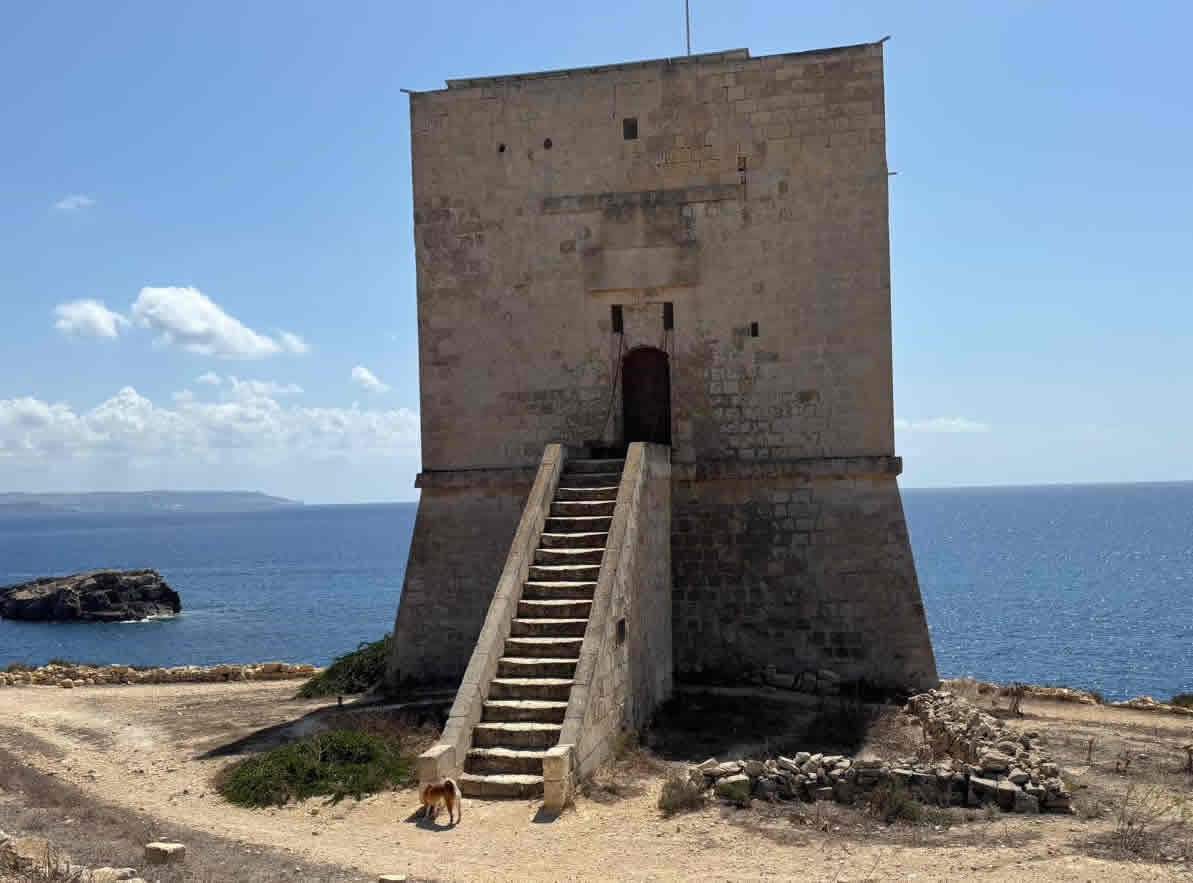
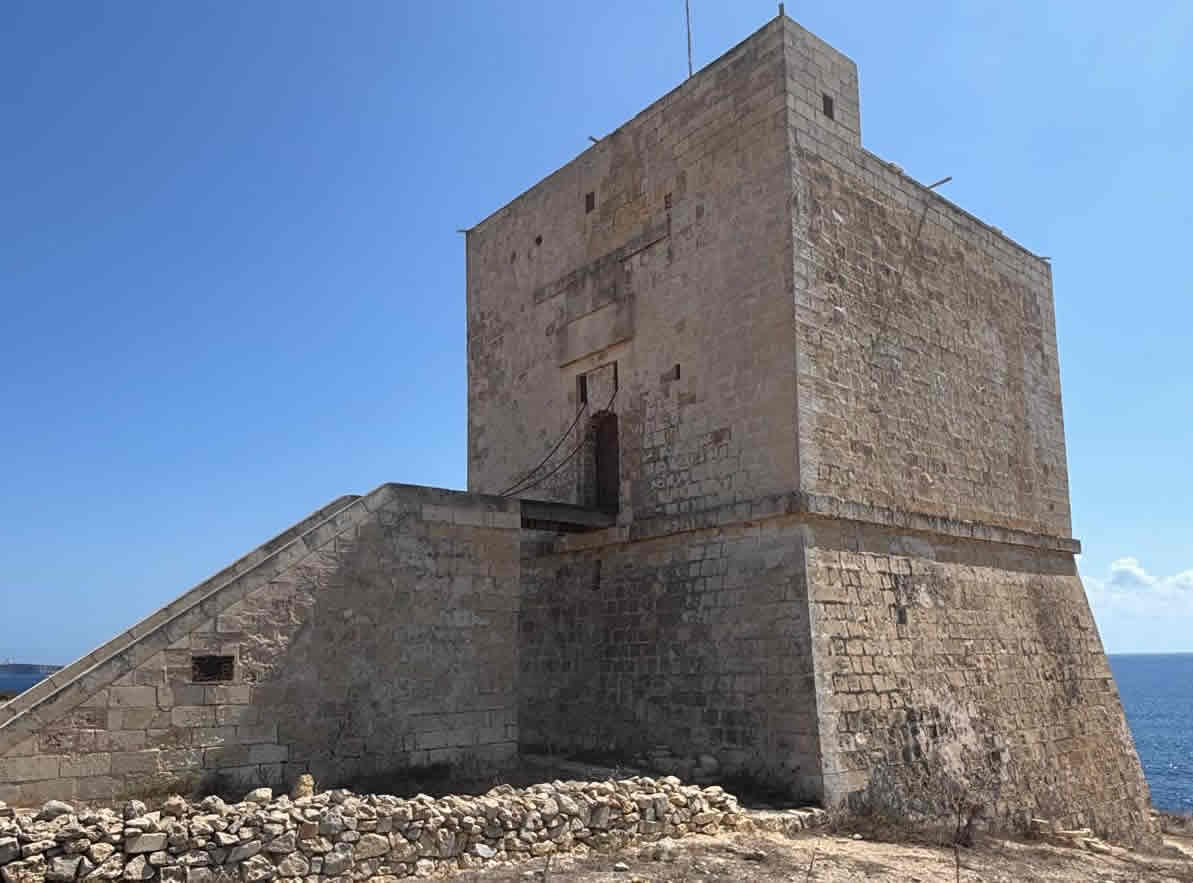
Mġarr ix-Xini was a secluded natural inlet that could provide shelter to small vessels. Its strategic position also made it vulnerable to hostile landings. The history of the bay was already marked by the devastating 1551 Ottoman raid on Gozo, when the inlet was used by the invading force.
The construction of the tower in the 17th century was part of the Order of St John’s continuing effort to strengthen Gozo’s coastline. The tower could observe the entrance to the inlet and communicate warnings to other watchtowers in the area.
Mġarr ix-Xini Tower is closely related in design to the coastal towers built on Malta during the period of Grand Master Martin de Redin. It is sometimes regarded as the Gozo example of this series of towers, although it has some important differences.
The tower has a square plan and two floors. Unlike many of the earlier watchtowers, its landward entrance was reached by a flight of steps and was protected by a drawbridge. The roof carried a gun platform enclosed by a parapet with embrasures.
The tower was built to a plan by Mederico Blondel, an engineer of the Order of St John. The estimated construction cost was 857 scudi, financed by the Università of Gozo.
The tower was therefore not simply a lookout post. It was a small, fortified military installation designed to shelter its garrison and provide artillery support while maintaining a clear view of the inlet.
The building contains two floors, with one main room on each level. The lower room was used by the guards and contains small windows and a hatch leading to the upper room. A winding staircase leads upwards to the roof.
The upper room has a strongly constructed vaulted ceiling, while the roof formed a protected gun platform. On the landward side were additional facilities including a small powder magazine and guardroom.
When the tower became operational, its artillery and gunpowder were provided by the Order. It was manned by a castellan and a professional bombardier, both salaried by the Università of Gozo.
The tower was equipped with two iron guns. Its garrison was small, but its elevated position and communications with neighbouring watchtowers allowed it to play an important role in the coastal warning system.
Mġarr ix-Xini Tower could communicate with other defensive positions in the area. Its line of sight included Comino Tower and, later, Santa Cecilia Tower on Gozo.
This network meant that a sighting at one point on the coast could be passed onwards by signals. Coastal towers therefore worked together as an early-warning system rather than operating as isolated buildings.
By the late 18th century the strategic situation had changed. The tower was no longer permanently manned by 1785, as the Ottoman threat that had shaped much of the Order’s coastal defence system had receded.
The tower nevertheless remained an important landmark at the entrance to Mġarr ix-Xini and survived the later changes that removed many other coastal defence structures from the landscape.
Mġarr ix-Xini Tower was restored in 2000 by the Ministry for Gozo together with Wirt Għawdex. Further restoration work followed in the 2000s, with major works completed in 2009.
The restoration helped preserve one of Gozo’s most important surviving Knights-era coastal towers and also reopened the path linking the tower with the bay, allowing visitors to experience the historic landscape on foot.
Today the tower stands above one of Gozo’s most secluded coastal inlets. The bay below is popular for swimming and diving, while the path leading up towards the tower provides views across the inlet and surrounding coastline.
The tower is managed with the involvement of Wirt Għawdex and is opened to visitors on selected days. Opening arrangements can change, so it is sensible to check current information before making a special journey to see the interior.
A sheltered, narrow inlet surrounded by steep limestone sides and a dramatic coastal landscape.
Explore Mġarr ix-Xini →Follow the path from the bay towards the tower and enjoy views across the inlet and surrounding countryside.
Explore walks →Compare Mġarr ix-Xini with Dwejra, Xlendi and the other surviving watchtowers of Gozo.
Explore Coastal Towers →The tower is reached from the Mġarr ix-Xini area by a path leading up from the inlet. The surrounding landscape is exposed and the approach includes uneven and sloping ground, so suitable footwear is recommended.
The bay itself is a destination for swimming, diving and coastal walking, so the tower can easily be combined with a wider visit to Mġarr ix-Xini.
Because access to the tower interior depends on opening arrangements, check current local information before travelling specifically to enter the building.
The tower was completed in 1661 and was functioning by June of that year.
The tower was built to a plan by Mederico Blondel, an engineer of the Order of St John.
It was built to watch the entrance to Mġarr ix-Xini and provide early warning against hostile or corsair activity along Gozo’s coast.
The tower carried two iron guns during the Knights’ period.
It was originally manned by a castellan and professional bombardier, but it was no longer permanently manned by 1785.
The tower was restored in 2000 by the Ministry for Gozo and Wirt Għawdex, with further restoration work completed in 2009.
Continue exploring Gozo’s coastal towers, landmarks and historic coastline.