01
Dwejra Tower
The historic watchtower that once helped guard this part of Gozo’s coastline and Fungus Rock.
Explore Dwejra Tower →Il-Ġebla tal-Ġeneral is one of Gozo’s most distinctive natural landmarks — a dramatic limestone islet whose unusual history is closely linked to the Knights of St John.
Fungus Rock, known in Maltese as Il-Ġebla tal-Ġeneral, is the large limestone islet that stands at the entrance to the Dwejra lagoon on Gozo’s western coast. Rising dramatically from the sea, it is one of the most recognisable features of the Dwejra landscape.
The rock is much more than a striking natural formation. For centuries it was associated with a rare parasitic flowering plant, Cynomorium coccineum, traditionally known as the Maltese Fungus. The plant gave the rock its English name and made this otherwise isolated islet an unusually important place in the history of the Maltese Islands.
Dwejra Bay
San Lawrenz, Gozo
Malta
Fungus Rock, known in Maltese as Il-Ġebla tal-Ġeneral, stands at the entrance to Dwejra Bay on Gozo's western coast. The dramatic limestone islet is one of the most recognisable natural landmarks in the Dwejra area.
Coordinates:
36.046984, 14.188377
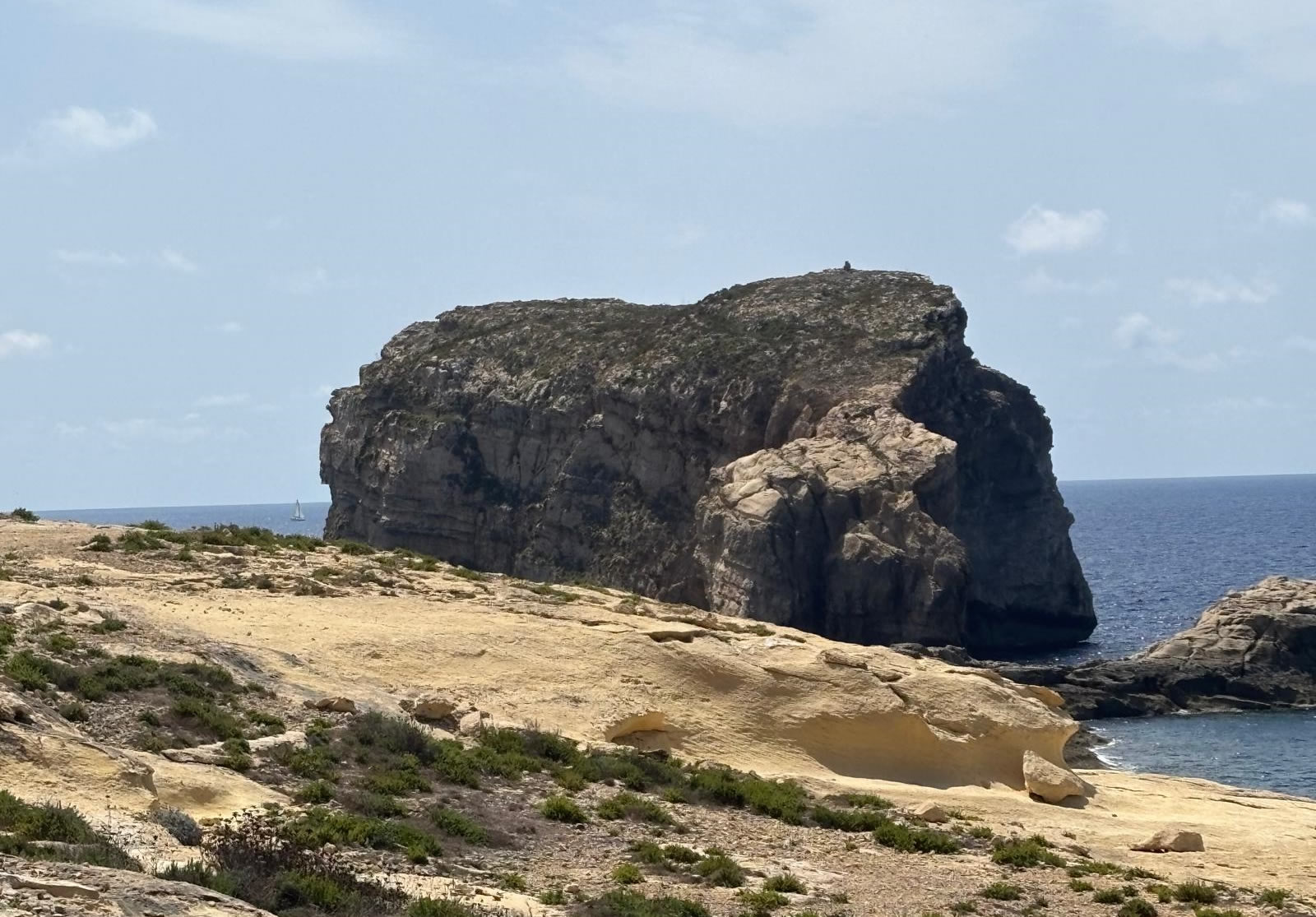
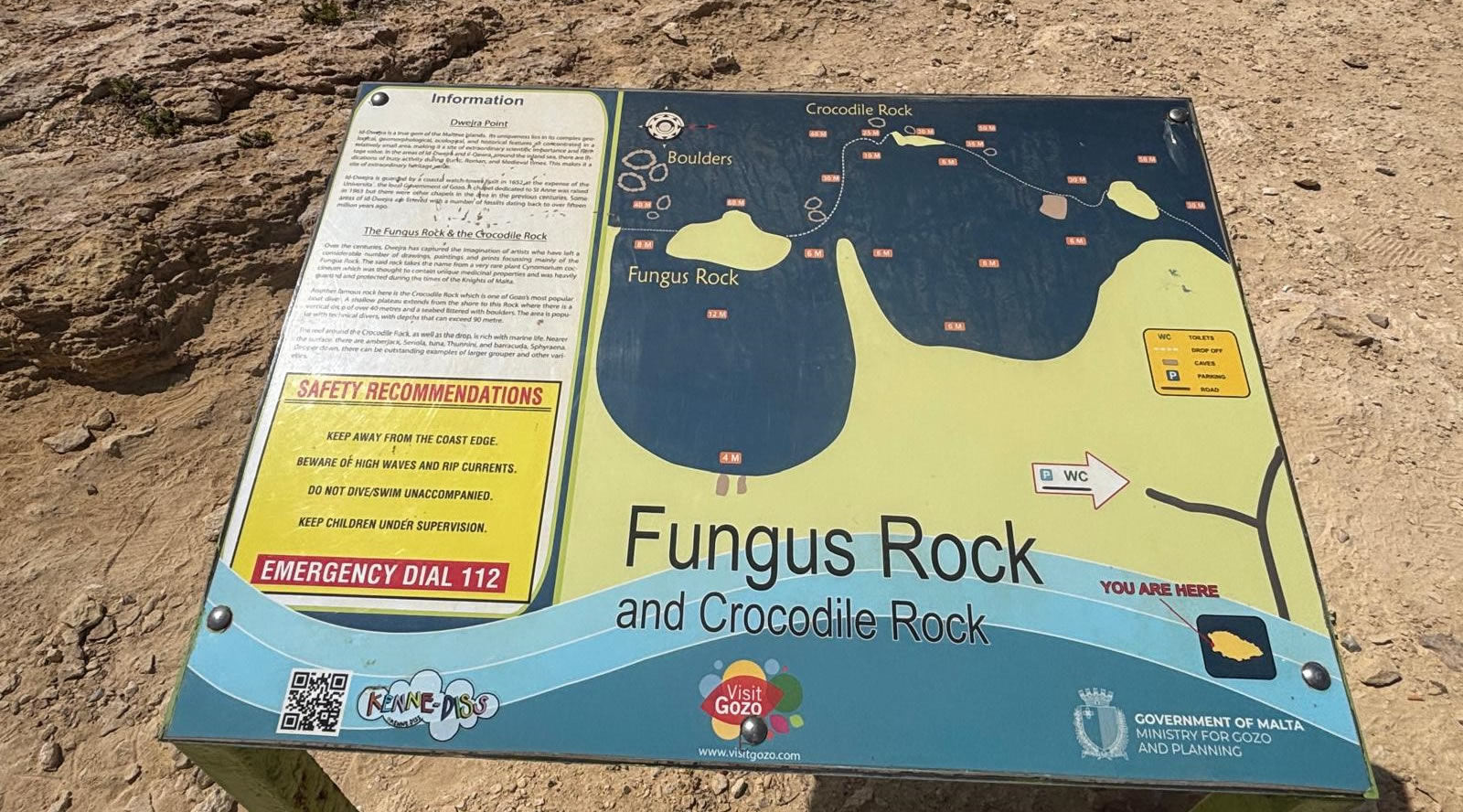
Fungus Rock is the remaining part of a former coastal arch. Erosion and the collapse of the arch left the isolated limestone stack that can be seen today. Its steep sides and exposed position make the rock difficult to reach.
The islet rises roughly 60 metres above sea level and forms a dramatic focal point when viewed from the Dwejra coast. It is particularly striking from the paths and viewpoints around the Inland Sea and Dwejra Bay.
Despite its traditional name, the Maltese Fungus is not actually a fungus. Cynomorium coccineum is a parasitic flowering plant with no green leaves. It was historically believed to have powerful medicinal properties and was used in traditional remedies.
The plant was highly prized by the Knights of St John and was associated with treatments for wounds and various illnesses. Its reputation made it a valuable substance and an important part of the history of Fungus Rock.
Modern knowledge does not support the extraordinary medicinal claims once made for the plant. Its historical importance, however, is undeniable.
The Knights treated the plant as a valuable resource and took extraordinary measures to prevent unauthorised collection. Access to the rock was eventually prohibited, while guards watched the islet from the nearby coast.
During the eighteenth century the sides of the rock were made even more difficult to climb. A system involving ropes and a suspended wooden box was used to provide controlled access for authorised collection of the plant.
The restrictions were severe. Unauthorised access could result in harsh punishment, reflecting the importance attached to the supposed medicinal properties of the plant.
The history of Fungus Rock is closely connected with Dwejra Tower. Completed in 1652, the tower served as a coastal watch post and also helped protect the valuable rock from unauthorised visitors.
The tower’s elevated position gave its guards a commanding view of the surrounding coastline and the sea approaches to Dwejra. It is one of the clearest examples of how Gozo’s natural landscape and military history became closely intertwined.
Fungus Rock is now a protected nature reserve. Access to the islet itself remains strictly restricted, helping to protect its geology, wildlife and natural environment.
Visitors should therefore enjoy Fungus Rock from the surrounding Dwejra viewpoints rather than attempting to land on or climb the rock. The surrounding coastline provides excellent opportunities for photography and for seeing the relationship between the rock, Dwejra Bay and the nearby cliffs.
The historic watchtower that once helped guard this part of Gozo’s coastline and Fungus Rock.
Explore Dwejra Tower →A sheltered lagoon connected with the open sea through a spectacular natural tunnel.
Explore the Inland Sea →Explore the cliffs, viewpoints, walks and remarkable natural landscape surrounding Fungus Rock.
Explore Dwejra →Fungus Rock is best appreciated from the Dwejra coastline. There are several viewpoints from which the islet can be seen clearly, including areas around Dwejra Bay and the Inland Sea.
The surrounding landscape is exposed and rocky, so suitable footwear is recommended. Take care near cliff edges, particularly during windy or rough weather.
Do not attempt to land on or climb Fungus Rock. It is a protected site and access to the islet is restricted.
It is known as Il-Ġebla tal-Ġeneral, meaning “The General’s Rock”.
The name comes from Cynomorium coccineum, a parasitic flowering plant that was historically mistaken for a fungus and became known as the Maltese Fungus.
The islet itself is protected and access is strictly restricted. Visitors can see it from the surrounding Dwejra coastline.
The Knights highly valued the plant growing on the rock because they believed it possessed important medicinal properties. They therefore took strong measures to control access and prevent unauthorised collection.
Dwejra Tower was used as a coastal watch post and also helped guard the valuable Fungus Rock. The two sites form an important part of Dwejra’s military and natural history.
Continue exploring Dwejra, Gozo’s landmarks and historic coastline.