01
Xlendi Bay
A dramatic inlet surrounded by limestone cliffs and one of Gozo’s best-known coastal landscapes.
Explore Xlendi Bay →A 17th-century coastal watchtower standing at the entrance to Xlendi Bay, built to watch the coast and protect one of Gozo’s secluded landing places.
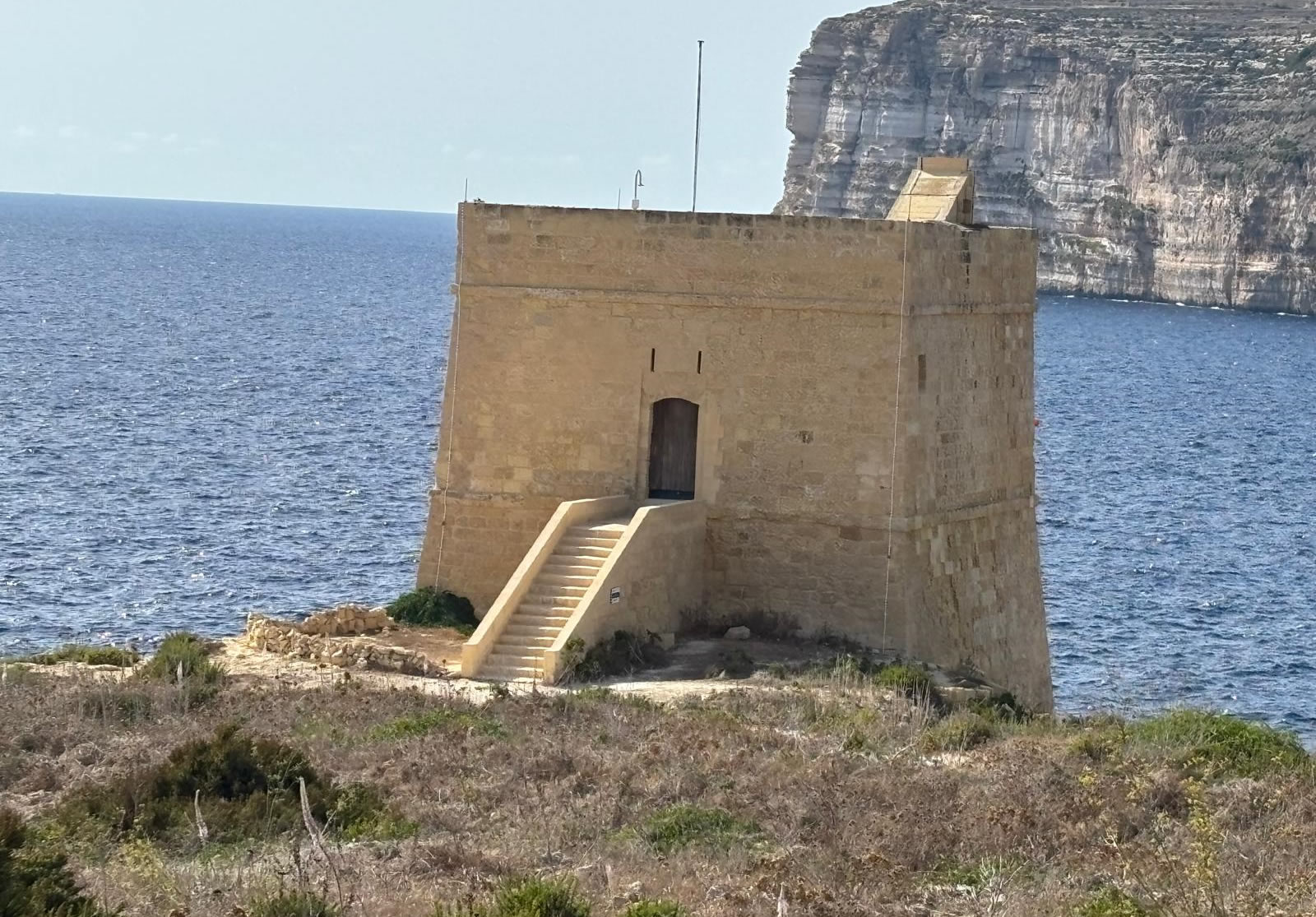
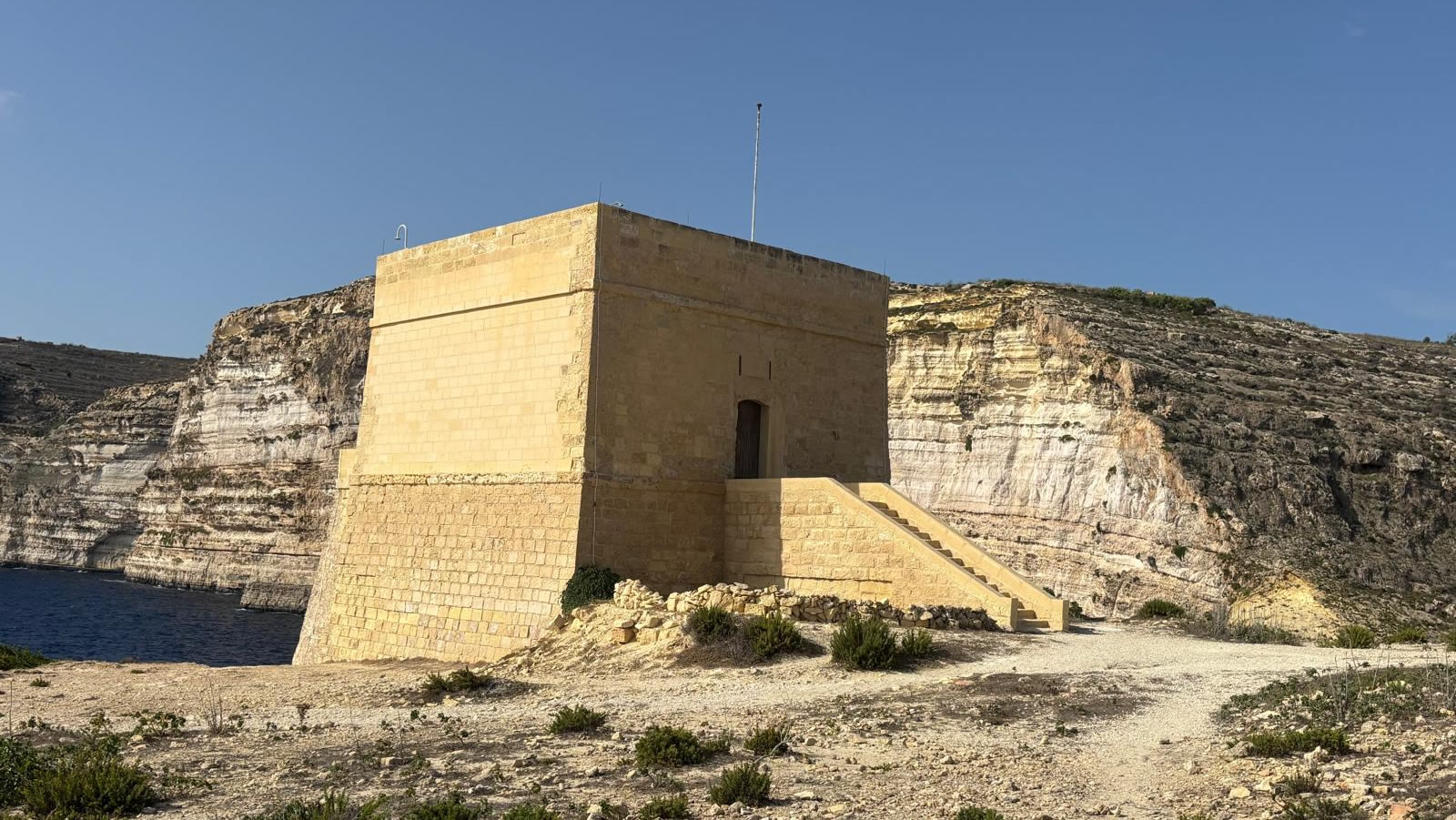
Xlendi Tower stands prominently at the entrance to Xlendi Bay on Gozo’s southwest coast. Completed in 1650 during the reign of Grand Master Giovanni Paolo Lascaris, it was built as part of the Order of St John’s coastal defence system.
The tower was intended to watch the approaches to the secluded bay, where vessels could shelter and where smugglers and pirates were a concern. Its position gave the guards a wide view across the southwest approaches and the surrounding coastline.
The idea for a tower at Xlendi was proposed in 1649 by Bailiff Baldassare de Demandolx. The Università of Gozo, the island’s local governing body at the time, financed its construction with 1,000 scudi.
The tower was completed on 29 June 1650. On the same day, Grand Master Lascaris ordered that two iron guns be sent to Gozo for installation at the newly completed tower.
Its principal purpose was to guard the entrance to Xlendi Bay, while the elevated position also allowed the small garrison to observe the surrounding sea approaches.
Xlendi Tower is particularly interesting because of its unusual construction. The tower is approximately 11 metres square at its base and has two floors. Its walls are exceptionally substantial, with the front and rear walls about 3.4 metres thick and the side walls about 2.5 metres thick.
A projecting platform on the seaward side is one of its most distinctive features. It provided the guards with an extended position from which to observe the southwest approaches to the Comino Channel.
Two iron guns were installed at the tower when it was completed. The tower was commanded by a Capo Mastro, or commander, who was a bombardier. An assistant, known as an Aggiutante, served with him, while guards formed part of the small defensive garrison.
This combination of lookout, artillery and manpower made Xlendi Tower an active part of Gozo’s coastal warning and defence system, rather than simply a passive observation post.
Exposure to the sea and weather quickly affected the building. An official inspection in 1681, only 31 years after its completion, found the tower in poor condition and requiring repairs.
The 1693 earthquake also affected Xlendi Bay. Historical accounts record an unusual withdrawal and return of the sea, which damaged the already weathered seaward platform of the tower.
After the Order of St John left Malta in 1798, the coastal fortifications eventually passed into British military control. The British Army formally took ownership of the tower and other Gozo fortifications in 1829.
The Royal Malta Fencible Regiment took over the coastguard role. Records show that repairs were still being requested in the nineteenth century, including an urgent request in 1871.
By the 1870s the coastal guard commitment had been relinquished and Xlendi Tower lost its original military role.
Xlendi Tower returned to an observation role during the Second World War. It was used as a Coastal Observation Post and was manned by members of the wartime Coast Police.
This later use echoed the tower’s original purpose: watching the sea approaches and keeping a lookout over the coast.
Once the coastal towers were no longer required for military purposes, Xlendi Tower was leased for private use. In 1954 it was leased to private individuals for use as a summer residence.
By 1979 the tower was in poor condition, with parts of the structure dismantled and vandalised. It was subsequently repaired, but later deterioration made a more substantial restoration necessary.
In 2009 responsibility for the tower was devolved jointly to Din l-Art Ħelwa and the Munxar Local Council. The partnership was established to restore and preserve the historic building.
Restoration work subsequently helped secure the tower as an important part of Xlendi’s historic landscape. The tower is now managed locally with the involvement of Gozo-based volunteers.
A dramatic inlet surrounded by limestone cliffs and one of Gozo’s best-known coastal landscapes.
Explore Xlendi Bay →Walk along the cliffs and rocky coastline around Xlendi for changing views of the bay and tower.
Explore walks →Discover how Xlendi Tower fitted into Gozo’s wider network of coastal watchtowers.
Explore Coastal Towers →Xlendi Tower stands immediately above the entrance to Xlendi Bay, making it easy to combine a visit with the bay, surrounding cliffs and coastal walks.
The surrounding terrain is exposed and uneven in places. Suitable footwear is recommended, particularly if exploring the rocky paths around the tower.
Opening arrangements for the tower can change, so check current local information before planning a visit specifically to enter the building.
Xlendi Tower was completed on 29 June 1650 during the reign of Grand Master Giovanni Paolo Lascaris.
It was built to guard the entrance to Xlendi Bay and provide surveillance over the surrounding sea approaches.
It is generally described as Gozo’s oldest surviving free-standing coastal tower. Earlier towers at Mġarr and Marsalforn no longer survive.
Two iron guns were ordered for the tower when it was completed in 1650.
Yes. It was used as a Coastal Observation Post and was manned by the Coast Police.
The tower was devolved jointly to Din l-Art Ħelwa and Munxar Local Council for restoration and preservation.
Continue exploring Xlendi, Gozo’s landmarks and historic coastline.