
Diving Xatt l-Aħmar
Xatt l-Aħmar is one of Gozo's best-known shore-entry diving areas. Located on the southeastern coast near Għajnsielem and Mġarr Harbour, the site combines a shallow reef plateau, a descending wall, rocky formations, caves and deeper wreck dives.
The Xatt l-Aħmar coast provides access to several different dive routes. Divers can explore the shallower reef and wall, investigate the caves and rocky formations, or use the separate shore entry further along the coast to reach the four offshore wrecks.
Shore entry points
Xatt l-Aħmar has separate shore access points for the reef and wall diving and for the four offshore wrecks. Most divers visiting the wrecks enter from the shore at the dedicated wreck entry point, further along the coast from the main bay.
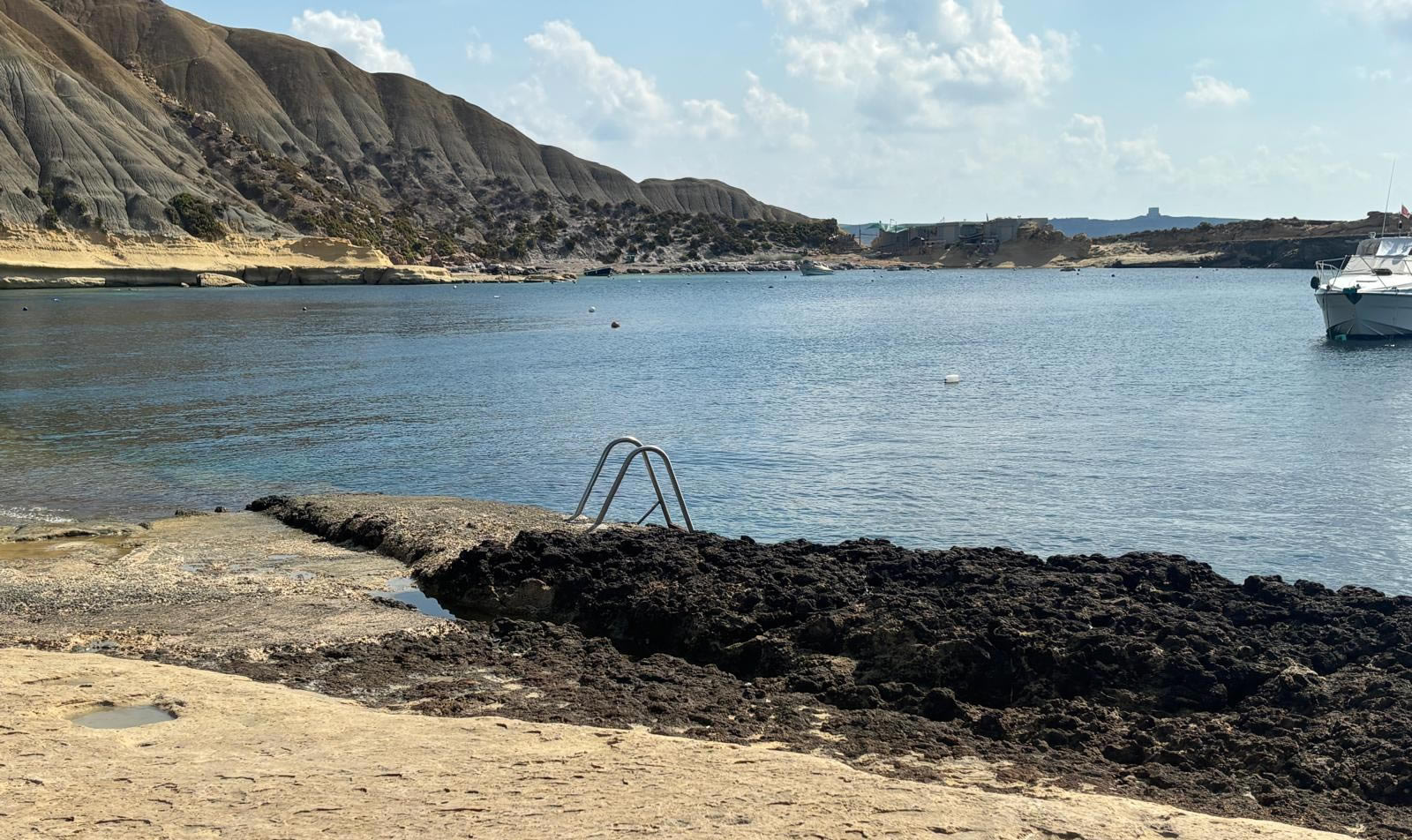
E1 — Reef & Wall
Shore entry point providing access to the Xatt l-Aħmar reef, wall, caves and rocky formations.
36.019583, 14.289033Open E1 in Google Maps →
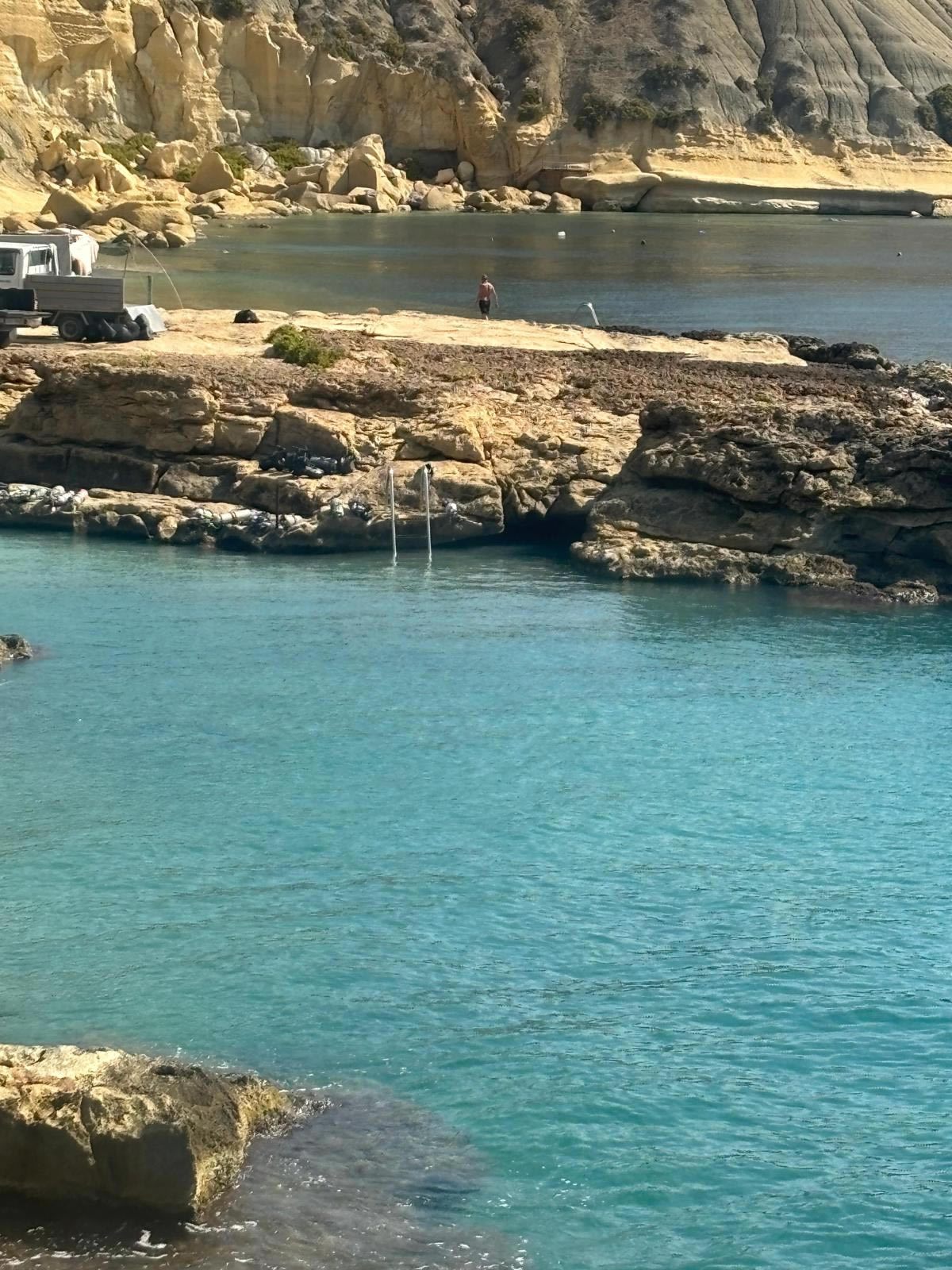
E2 — Reef & Wall
Second shore entry point for the Xatt l-Aħmar reef and deeper reef and wall routes.
36.019363, 14.288390Open E2 in Google Maps →
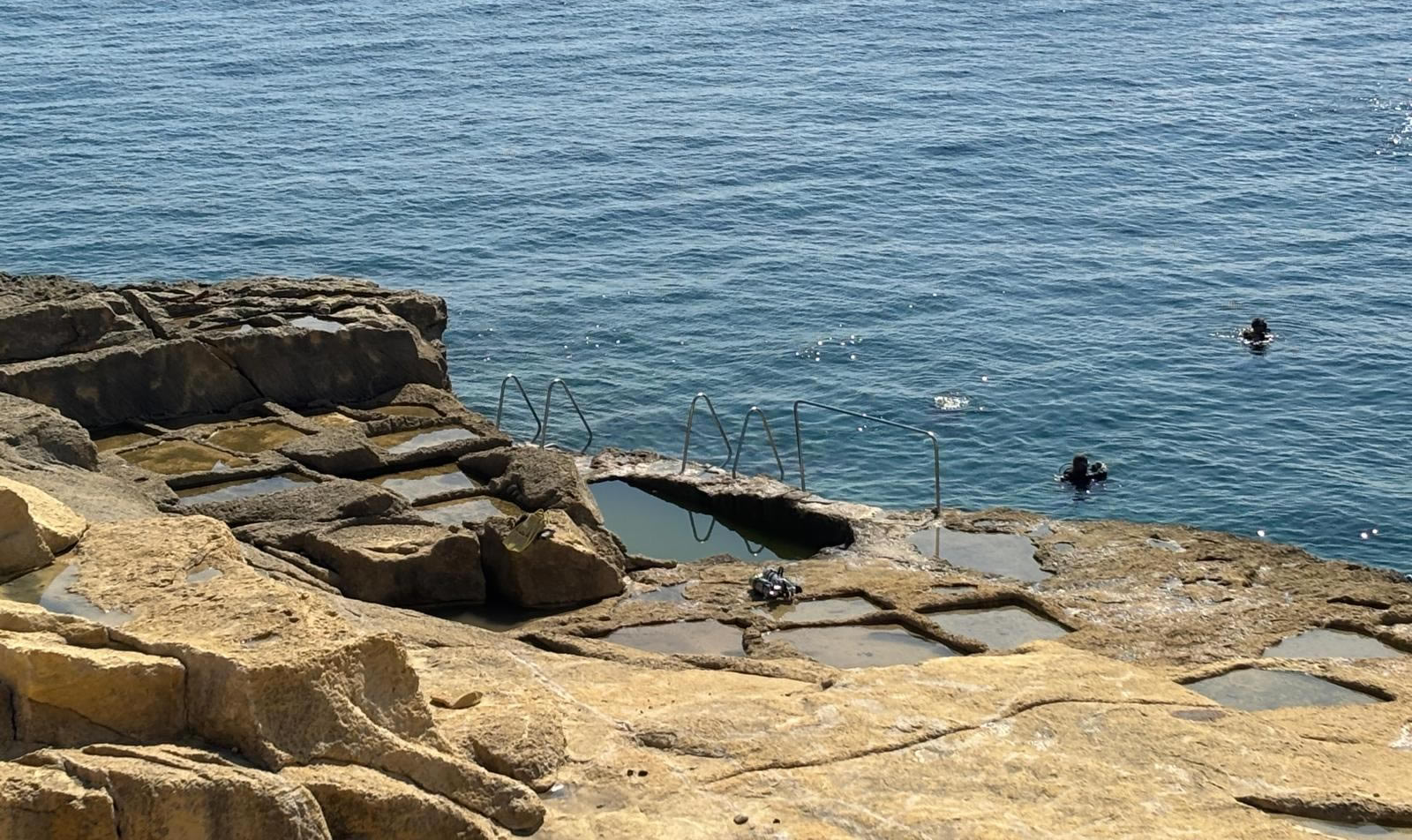
Wreck Entry
Dedicated shore entry used by divers accessing the four Xatt l-Aħmar wrecks. This entry is further along the coast, away from the main bay and the E1 and E2 reef entries.
36.017903, 14.286045Open Wreck Entry in Google Maps →
The reef and wall
The dive begins on a broad shallow reef plateau, with published descriptions placing the initial reef at approximately 5–8 metres. From here the rocky ledge descends towards the deeper wall.
The wall and surrounding boulders provide cracks, ledges and swim-throughs. Neptune grass and rocky habitats support a variety of Mediterranean marine life, while the caves and formations add further routes to explore.
Xatt l-Aħmar Bay
A short look at the bay at Xatt l-Aħmar.
Caves and rocky formations
The Xatt l-Aħmar reef includes caves, overhangs and boulder formations shown on published dive maps of the site. These shallower features can form part of a dive before or after the deeper sections of the route.
The four Xatt l-Aħmar wrecks
The four wrecks are a major part of Xatt l-Aħmar's diving appeal, but each has its own dedicated e-Malta guide. Use the links below for the detailed wreck information, depths, access and diving considerations.
Marine life
The combination of reef, wall, boulders, seagrass and wrecks creates a wide range of habitats. Divers may encounter groupers, moray eels, octopus, bream, goatfish and numerous smaller reef species.
The wrecks themselves have become artificial reefs, supporting algae, sponges, sea firs and other marine organisms. The surrounding rocks also provide shelter for smaller Mediterranean species.
Multi-level diving
One of the advantages of Xatt l-Aħmar is the ability to combine different depths during a dive. The shallow reef and wall provide shallower sections before and after visiting deeper areas.
This makes the site particularly interesting for experienced divers planning a multi-level profile, provided the dive remains within the diver's training, equipment and decompression plan.
Photographs


Photograph: courtesy of Acciola.


Location
Xatt l-Aħmar is on the southeastern coast of Gozo near Għajnsielem and Mġarr Harbour. The dive site is reached from the shore and provides access to the reef, wall, caves and offshore wrecks.
Location & map
The map below shows the Xatt l-Aħmar shore-entry area. The two established entry points are E1 and E2; the offshore wrecks are covered on their individual dive pages.
Xatt l-Aħmar diving FAQ
Where is Xatt l-Aħmar?
Xatt l-Aħmar is on the southeastern coast of Gozo near Għajnsielem and Mġarr Harbour. It is a shore-entry diving area with a reef, wall, caves and four offshore wrecks.
Where are the Xatt l-Aħmar entry points?
The two established shore entry points are E1 at 36.019583, 14.289033 and E2 at 36.019363, 14.288390.
Is Xatt l-Aħmar suitable for shore diving?
Yes. The site is accessed from the shore. The shallow reef and wall provide shallower diving, while the deeper wrecks require appropriate training and experience.
What wrecks are at Xatt l-Aħmar?
There are four major wrecks at Xatt l-Aħmar: MV Karwela, MV Cominoland, MV Xlendi and MV Hephaestus. Each has its own detailed e-Malta dive page.
How deep are the Xatt l-Aħmar wrecks?
The wrecks are deep dives. Individual depths vary by wreck, so divers should use the dedicated wreck guides and plan the dive within their training, equipment and experience.
What level of diver is recommended?
The shallow reef can be suitable for less experienced divers, but the deeper wrecks require appropriate deep and wreck-diving training and experience.
Can the MV Xlendi be entered?
Wreck penetration of the MV Xlendi is not recommended because the vessel is overturned and considered unstable.
What marine life can be seen at Xatt l-Aħmar?
The reef and wrecks support a variety of Mediterranean marine life, including groupers, moray eels, octopus, bream, goatfish, nudibranchs and other reef species.