MT Hephaestus Wreck Diving
MT Hephaestus is the newest major wreck at Xatt l-Ahmar on Gozo's south-eastern coast. The former oil tanker was deliberately scuttled as a diving attraction in 2022 and now forms the fourth major artificial-reef wreck in the area, alongside MV Karwela, MV Cominoland and MV Xlendi.
The wreck is approximately 61.33 metres long and lies upright on a sandy seabed at around 46 metres. Dive references place the shallower parts of the wreck at around 32 metres, with the stern reaching the deeper section. The depth makes this a dive for suitably qualified and experienced divers.
Access to MT Hephaestus
MT Hephaestus can be reached from the shore or by boat. The wreck lies close to the Xatt l-Ahmar coast, but the depth means that the shore route is a serious deep dive rather than a routine reef dive. The wreck can also be approached by boat, with local dive operators providing access according to conditions and experience.
The Hephaestus is the easternmost of the four major wrecks at Xatt l-Ahmar and is the furthest from the main shore entry area. From the shore, divers must swim out across the reef before descending to the wreck. A boat or diver propulsion vehicle can reduce the surface and underwater transit.
The History of MT Hephaestus
The Hephaestus was a bunkering oil tanker built in 1965. The vessel was approximately 61.33 metres long, with a beam of about 7.93 metres and a gross tonnage of 595 tonnes. She operated in Maltese waters before running aground at Qawra Point on 10 February 2018 during severe weather.
After the grounding, the vessel was assessed and later prepared for use as an artificial reef. Before scuttling, equipment was removed and the vessel was cleaned and prepared to meet the requirements for deliberate sinking as a diving attraction.
On 29 August 2022, the Hephaestus was deliberately scuttled at Xatt l-Ahmar, Gozo. She settled upright on the sandy seabed, creating a fourth major wreck dive alongside the MV Karwela, MV Cominoland and MV Xlendi.
The Hephaestus Wreck
The Hephaestus sits upright on the seabed, giving the wreck a very different character from the overturned MV Xlendi nearby. Its long hull, prominent bridge and open cargo holds make the tanker immediately recognisable underwater.
The wreck runs from shallower sections around 32 metres down to approximately 46 metres. The deeper stern section is beyond normal recreational diving limits, so the planned route and gas requirements are particularly important.
61.33m Long
The former tanker measures approximately 61.33 metres from bow to stern.
Upright Wreck
The vessel rests upright on the sandy seabed rather than lying overturned.
32–46m
The wreck spans a deep section of approximately 32 to 46 metres.
Artificial Reef
The scuttled tanker is becoming an artificial reef and is being colonised by marine life.
Inside the Hephaestus
The vessel has large open holds and a prominent bridge structure. Openings were prepared as part of the wreck's conversion for diving, providing access to selected areas for suitably trained divers where local operators consider conditions appropriate.
Penetration of any wreck requires specialist training, appropriate equipment and a conservative plan. The depth of the Hephaestus also means that penetration can add significant gas, navigation and decompression demands.
Marine Life
As a relatively recent artificial reef, the Hephaestus provides a developing habitat for Mediterranean marine life. Divers can encounter fish around the hull and superstructure, while algae, sponges and other marine growth continue to colonise the wreck.
The surrounding sandy seabed and nearby reef add further habitat. The site is particularly interesting for divers who want to see how a newly scuttled vessel becomes established as an artificial reef.
Depth and Dive Profile
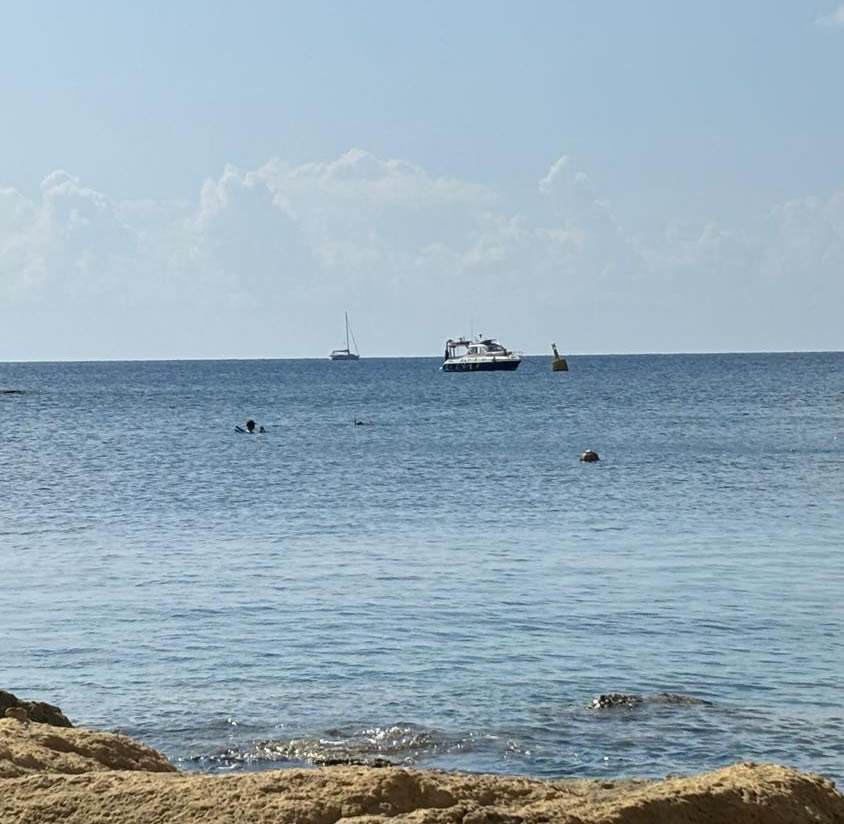
Published dive references place the Hephaestus at approximately 32–46 metres, with the deepest part around 46 metres. The wreck lies offshore from Xatt l-Ahmar and is marked by a yellow navigation buoy. Despite being accessible from the shore, this is a deep dive, with the main wreck route descending to substantial depth.
This is an experienced/deep wreck dive. Gas planning, bottom time, decompression requirements, current, visibility and the chosen access method all need to be considered before entering the water. Conditions can change and local dive-centre advice should be followed.
Photography at MT Hephaestus
The upright hull, long deck line, bridge and open cargo holds provide strong subjects for wide-angle wreck photography. The depth and limited available bottom time make careful planning particularly important for photographers.
Photographs
 MT Hephaestus at Xatt l-Ahmar.
 The bridge and upper structure of the Hephaestus.
Add an underwater MT Hephaestus photograph.
Suggested filename: mv-hephaestus-3.jpg
More photographs of MT Hephaestus will be added as the wreck and surrounding reef are documented.
Location
MT Hephaestus lies offshore from Xatt l-Ahmar alongside the area's other artificial-reef wrecks. The map is centred on the published position of the Hephaestus wreck.
Location & Map
MT Hephaestus lies offshore from Xatt l-Ahmar and is marked by an offshore yellow navigation buoy. The map is centred on the published position of the wreck.
MT Hephaestus Gozo – Frequently Asked Questions
Where is the MT Hephaestus wreck?
MT Hephaestus lies off Xatt l-Ahmar on Gozo's south-eastern coast, close to the other artificial-reef wrecks.
How deep is the Hephaestus?
The wreck spans approximately 32–46 metres, with the deepest section around 46 metres.
Can the Hephaestus be dived from shore?
Yes. The wreck is accessible from the shore at Xatt l-Ahmar, although the depth makes it a demanding deep wreck dive. Boat access is also possible.
When was the Hephaestus scuttled?
The tanker was deliberately scuttled at Xatt l-Ahmar on 29 August 2022 as an underwater attraction and artificial reef.
What type of vessel was the Hephaestus?
She was a 61.33-metre oil tanker, built in 1965 and measuring approximately 7.93 metres across the beam.
Is the Hephaestus suitable for beginners?
No. The wreck is a deep dive reaching approximately 46 metres and is intended for suitably qualified and experienced divers with appropriate deep and wreck-diving training.
Can divers enter the Hephaestus?
Selected openings provide access to parts of the vessel for suitably trained divers, but penetration adds significant navigation, gas-management and decompression demands. Follow local dive-centre guidance and do not enter areas for which you are not trained or equipped.
What marine life can be seen on the Hephaestus?
The tanker is developing as an artificial reef, with fish and marine growth colonising the hull and superstructure. The surrounding reef and seabed provide additional habitats.
Nearby Gozo Dive Sites
Xatt l-Aħmar
The reef and wall surrounding the four major artificial-reef wrecks at Xatt l-Ahmar.
MV Karwela
The famous upright passenger-ferry wreck at Xatt l-Ahmar, scuttled in 2006.
MV Cominoland
Another artificial-reef wreck in the Xatt l-Ahmar group, scuttled in 2006.
MV Xlendi
The famous upside-down Gozo Channel ferry wreck, lying at about 42 metres.