
The Blue Hole at Dwejra
The Blue Hole Gozo is one of the island's most famous dive sites, located at Dwejra on Gozo's dramatic west coast. This natural limestone rock pool leads through an underwater arch into the open Mediterranean, with reef, wall, cave and marine-life diving beyond. The Blue Hole is a shore-entry dive and conditions can change quickly, so sea conditions should always be checked before entering the water.
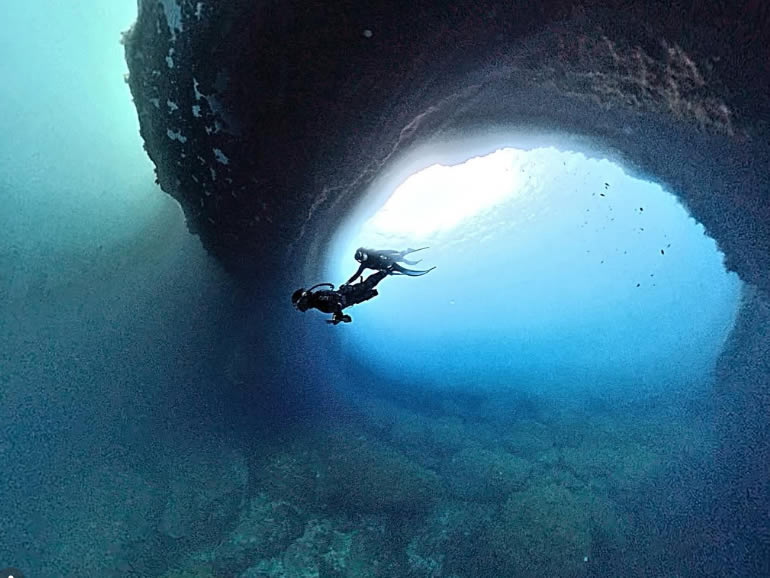
For divers, the transition from the sheltered Blue Hole through the arch and out onto the open-water reef is one of the defining experiences of diving in Gozo. The surrounding underwater landscape includes steep limestone walls, caves, cracks and abundant marine life.
The Blue Hole is a shore-entry dive site. The site is exposed to sea conditions, so divers should always check local conditions and follow the advice of their dive centre or qualified guide before entering the water.
Blue Hole Gozo Diving
The Blue Hole is a natural limestone formation at Dwejra, on the western coast of Gozo. The sheltered rock pool provides the entrance to one of the island's best-known shore dives. An underwater arch connects the Blue Hole with the open sea, where the dive continues along the Dwejra reef and wall.
The site is particularly well known for its unusual underwater landscape. Divers can explore the natural arch, caves, rock formations and deeper reef sections, with the route and depth depending on experience, certification, conditions and the dive plan.
The Blue Hole is close to the Inland Sea and is often included as part of a Dwejra diving day. The remains of the former Azure Window are also part of the underwater landscape in this area.
Blue Hole Gozo: Entry & Access
The Blue Hole is accessed from the shore at Dwejra. The approach involves walking across uneven rocky limestone, and divers should allow enough time to prepare equipment before entering the water.
The entry and exit can be affected by waves, swell and sea conditions. Always assess the conditions before entering and follow the instructions of your dive centre or qualified guide.
Dive Information
The Blue Hole
A natural limestone pool at Dwejra leading towards the open sea through an underwater arch.
The Arch
The natural underwater arch is the dramatic gateway between the Blue Hole and the open Mediterranean.
The Reef Wall
Beyond the arch, the seabed falls away along the spectacular Dwejra reef and wall.
Maximum Depth
Depth depends on the route followed and the diver's training and certification. The site includes both shallower and considerably deeper sections.
Photograph: Henry Copperstone (@acciola)
Blue Hole Diving Conditions
The Blue Hole is an exposed coastal dive site and conditions can change quickly. Waves, swell, wind and currents can affect both the approach and the entry into the water.
A calm sea is important for a comfortable and safer entry and exit. Divers should check the current marine conditions and take local advice before diving. If conditions are unsuitable, the dive should be postponed.
What You Can See
The underwater scenery is the main attraction of the Blue Hole. Limestone formations surround the pool and continue beneath the surface, creating arches, walls, cracks and sheltered areas where marine life can be found.
Divers may encounter colourful reef fish, sponges, corals, moray eels, octopus and other Mediterranean marine life. Conditions and sightings naturally vary with season, visibility and sea conditions.
Diving the Blue Hole
The dive begins from the rocky shoreline at Dwejra. The Blue Hole itself provides a sheltered starting point before the route continues towards the underwater arch.
Passing through the arch reveals the open Mediterranean and the dramatic reef wall beyond. Experienced divers can explore deeper sections according to their certification, equipment, gas planning and the conditions on the day.
The Blue Hole is particularly memorable because the underwater landscape changes dramatically within a short distance — from the enclosed rock pool to the deep blue of the open sea.
The Azure Window and Blue Hole
The Blue Hole is located beside the site of the former Azure Window, the famous natural limestone arch that stood at Dwejra until it collapsed during a severe storm in March 2017.
The collapse changed the underwater landscape around Dwejra. Large blocks of limestone now form part of the underwater reef and are explored by divers in the area.
Photographs
 A diver explores the deep blue waters of the Blue Hole, Dwejra, Gozo.
Mrcrycrash, CC BY-SA 4.0

via Wikimedia Commons
 The submerged remains of the Azure Window, close to the Blue Hole at Dwejra, Gozo.
Mrcrycrash, CC BY-SA 4.0

via Wikimedia Commons
Add your underwater arch photograph.
Suggested filename: blue-hole-arch.jpg
Photographs taken at Dwejra will be added to this page as the site is documented.
Location
The Blue Hole is located at Dwejra on the western coast of Gozo, close to the Inland Sea and the remains of the former Azure Window.
Location & Map
The Blue Hole is at Dwejra on the western coast of Gozo, close to the Inland Sea and the Dwejra coastal landscape.
Blue Hole Gozo – Frequently Asked Questions
Where is the Blue Hole in Gozo?
The Blue Hole is at Dwejra on the west coast of Gozo, close to the Inland Sea and the site of the former Azure Window. It is one of Gozo's best-known diving locations.
How deep is the Blue Hole in Gozo?
The Blue Hole itself is approximately 15 metres deep. The wider dive site continues into deeper water, with the depth depending on the route and dive plan.
Is the Blue Hole a shore dive?
Yes. The Blue Hole is accessed from the shore at Dwejra. Divers enter through the natural rock pool before continuing through the underwater arch towards the open sea.
Is the Blue Hole suitable for beginners?
The Blue Hole is generally considered more suitable for experienced divers because of the rocky entry, changing sea conditions and the underwater sections beyond the Blue Hole itself. Beginners should dive only with appropriate training and qualified local guidance.
What can you see when diving the Blue Hole?
The dive includes unusual limestone formations, the underwater arch, reef and wall sections, caves and marine life. The underwater landscape around Dwejra was also changed by the collapse of the Azure Window in 2017.
Can you dive the Blue Hole when the sea is rough?
Sea conditions are important at the Blue Hole, particularly for the rocky entry and exit. Waves, swell, wind and currents can change quickly. Always check current conditions and take local advice before entering the water. If conditions are unsuitable, the dive should be postponed.
Is the Blue Hole close to the Inland Sea?
Yes. The Blue Hole and Inland Sea are both at Dwejra and are only a short distance apart. The area is one of the most important locations for diving and exploring Gozo's dramatic west coast.
What happened to the Azure Window?
The Azure Window was a famous natural limestone arch at Dwejra until it collapsed during a severe storm on 8 March 2017. The remains of the formation are now part of the underwater landscape around the Dwejra dive sites.
Nearby Gozo Dive Sites
Inland Sea & Tunnel
The Inland Sea is immediately adjacent to the Blue Hole. Its spectacular tunnel leads from the sheltered lagoon through the Dwejra headland towards the open sea.
Explore Gozo
Explore more of Dwejra and Gozo's spectacular coastal landscapes, including cliffs, caves, rock formations and marine environments.