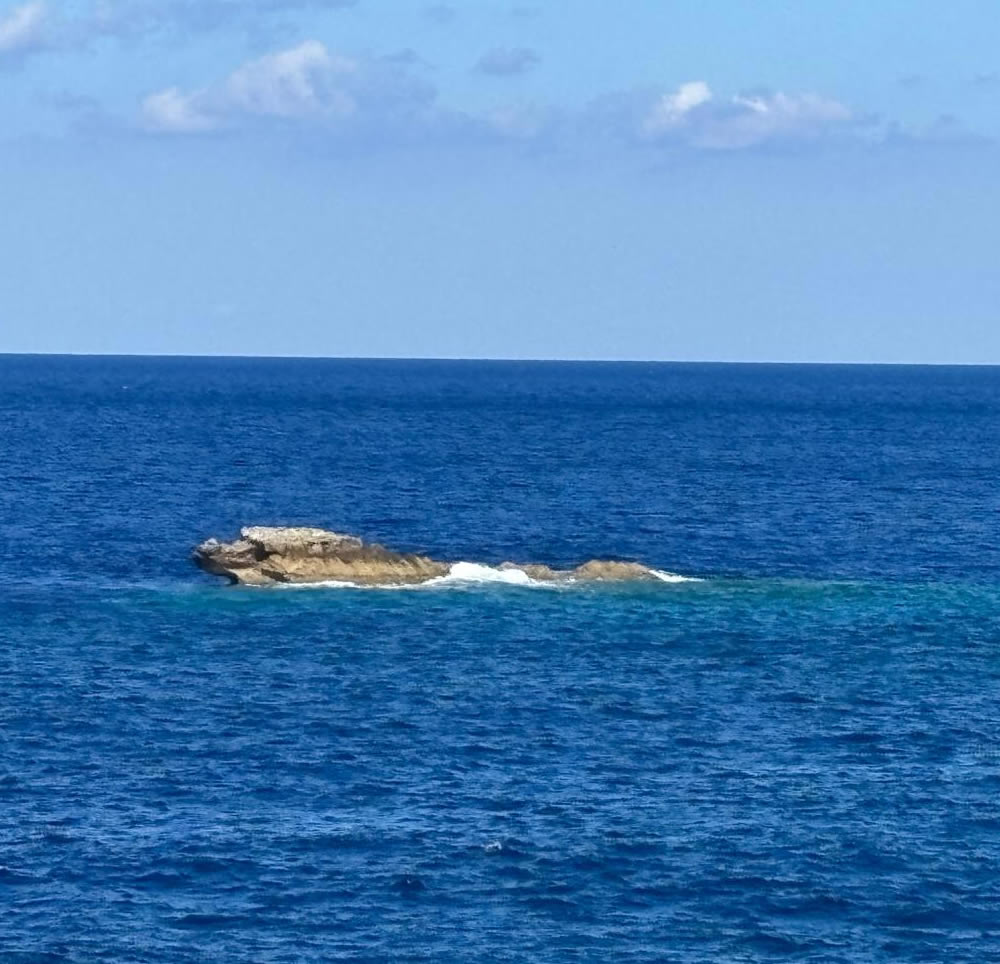
Crocodile Rock at Dwejra
Crocodile Rock is one of the distinctive offshore dive sites at Dwejra on Gozo's west coast. The low-lying rock has a recognisable crocodile-like shape and lies approximately 150 metres offshore between Dwejra Point and Fungus Rock.
The dive combines a relatively shallow plateau with a steep wall, deep fissures and large boulders. The changing depth makes it possible to explore different parts of the site according to certification, experience and the day's conditions.
Visit Gozo lists Crocodile Rock as an Advanced dive with an average depth of 35m and a maximum depth of 65m.
Crocodile Rock Diving
The dive normally begins on the sheltered side of the rock. From the shallow plateau, divers head west towards a natural amphitheatre with near-vertical sides before reaching the steep wall beneath the seaward side of the rock.
Continuing around the rock reveals deep fissures and cracks in the limestone. The lower part of the wall is scattered with large boulders, providing shelter for groupers and other marine life.
Dive Information
Shallow Plateau
The eastern side has a shallow plateau used for anchoring and provides a gradual start before the deeper wall.
Steep Wall
The reef drops steeply from the plateau towards deeper water, creating the main wall section of the dive.
Deep Fissures
Deep cracks and fissures cut through the limestone around the rock and shelter marine life.
Large Boulders
Huge boulders lie at the foot of the wall and provide important refuge for groupers and other fish.
Crocodile Rock Diving Conditions
The site is offshore and conditions can vary considerably. Wind, waves, swell and visibility should be assessed before diving. Boat access is commonly used, while Atlantis also lists the site as accessible by shore.
The shallow plateau offers a more sheltered starting area, but the main wall and deeper sections are exposed to the open sea. Divers should follow local advice and only dive the deeper sections within their training and experience.
What You Can See
Crocodile Rock is particularly noted for its prolific marine life. Damselfish, bogue and salema are common around the reef, while groupers, barracuda, tuna, dentex and amberjack may be encountered in the deeper water.
The combination of limestone fissures, boulders, wall and reef makes the site interesting for underwater photography, especially when visibility is good.
Diving the Crocodile Rock Wall
From the sheltered side, the dive route moves towards the amphitheatre and then follows the wall. The depth increases progressively before reaching the deeper sections beneath the seaward side of the rock.
Experienced divers can explore the fissures and boulder fields according to their dive plan. The site reaches considerably greater depths than the shallow plateau, so proper gas management and depth awareness are essential.
Photographs

Add an underwater photograph of Crocodile Rock.
Suggested filename: crocodile-rock-underwater.jpg
Photographs taken at Dwejra will be added to this page as the site is documented.
Location
Crocodile Rock lies approximately 150 metres offshore between Dwejra Point and Fungus Rock on the west coast of Gozo.
Crocodile Rock Gozo – Frequently Asked Questions
Where is Crocodile Rock in Gozo?
Crocodile Rock is at Dwejra on Gozo's west coast, approximately 150 metres offshore between Dwejra Point and Fungus Rock.
How deep is Crocodile Rock?
Visit Gozo lists an average depth of 35 metres and a maximum depth of 65 metres. The site also has a much shallower plateau, so the exact depth depends on the route followed.
Is Crocodile Rock a boat dive?
Boat access is commonly used, while Atlantis lists both boat and shore access. The rock itself is offshore, so the approach and route should be planned with local dive professionals.
What level of diver is Crocodile Rock suitable for?
Visit Gozo classifies Crocodile Rock as Advanced. The deep wall and maximum depth require appropriate training, equipment and experience.
What marine life can you see?
Common sightings include damselfish, bogue, salema and groupers, with barracuda, tuna, dentex and amberjack also reported around the site.
Why is it called Crocodile Rock?
The low-lying offshore rock has a distinctive outline resembling a crocodile when viewed from above or from the surrounding coast.
Nearby Gozo Dive Sites
Blue Hole
Gozo's famous Dwejra shore dive, with a natural rock pool, underwater arch and reef.
Inland Sea
A spectacular Dwejra tunnel connecting the sheltered lagoon with the open sea.
Ħekka Point
A dramatic north-west Gozo site combining a cavern, wall and submerged cave.
Wied ir-Raħeb
A demanding west Gozo boat dive known for its caves, wall and deep water.